

When Californian temperatures spike or industrial systems run hot, portable cooling tower rental in Riverside County is a lifesaver. These compact, flexible systems are commonly deployed during plant maintenance, emergencies, or seasonal load spikes. From petrochemical plants to food processing facilities, their mobility, modularity, and fast setup make them a go-to solution for temporary cooling needs.
But here’s the catch: just because they’re portable doesn’t mean they’re plug-and-play. Running a portable cooling tower efficiently takes more than flipping a switch. Operators need to be aware of key best practices to ensure peak performance, reliability, and longevity, because downtime or damage can be costly. Let’s dive into the best practices that keep these workhorses humming.
What are the best practices for running a portable cooling tower?
 Operating a portable cooling tower isn’t rocket science—but it’s also not foolproof. By taking time to set it up right, follow operational guidelines, and maintain it like a permanent system, you’ll avoid hiccups and ensure optimal performance.
1. Site planning is step one
Before anything else, make sure the tower is being placed on level, stable ground—preferably a concrete or reinforced surface. Account for clearance space around the unit (usually 3 to 5 feet minimum) to allow for unrestricted airflow. Poor placement can restrict intake and hurt performance.
2. Dial in your flow rates
Portable towers are sized for specific flow ranges, so don’t eyeball it. Check your system’s GPM requirements and match that to the tower’s rated performance. Undershooting the flow rate can lead to poor cooling, while overshooting can cause water carryover, erosion, or pump cavitation.
3. Use the right water treatment
Here’s where many operations slip up. Temporary doesn’t mean optional—water chemistry still matters. Without proper treatment, scale, corrosion, or biological growth can degrade the tower’s performance quickly.
4. Don’t forget electrical safety
Portable towers often come with VFDs, control panels, and multi-horsepower fan motors. All electrical connections should be weatherproof, properly grounded, and reviewed by a qualified electrician. Verify voltage and phase match before firing up the unit.
5. Monitor like it’s permanent equipment
Just because it’s mobile doesn’t mean you can “set it and forget it.” Monitor the approach temperature, fan operation, water levels, and pump pressures daily. Most rental-grade towers won’t have SCADA integration, so assign a technician or use manual logs.
How do I maintain a portable cooling tower for optimal performance?
Whether it’s a two-week job or a seasonal install, and whether you’re renting a unit for a shutdown or using one for peak load relief, knowing how to operate and maintain your portable tower correctly will pay off in spades.
1. Daily inspections are non-negotiable
Start your day with a walkaround. Check for leaks, unusual noises, fan imbalance, and drift from the exhaust. Look for mineral buildup on fill media or louvers. If your unit has a basin heater or float switch, test them routinely.
2. Keep the fill clean & clear
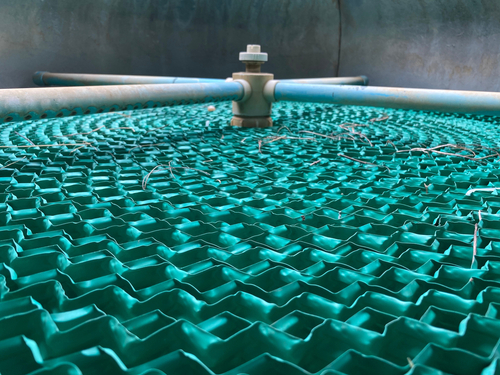
The fill (heat exchange surface) is your tower’s heart. If it gets clogged with algae, dirt, or scale, the performance tanks. Use side-stream filtration if possible, especially on dusty sites or where water quality is questionable.
3. Monitor water quality throughout the run
Check for pH, conductivity, and total hardness every couple of days. Temporary towers are often filled from local water supplies, which can vary wildly. Chemical feed and blowdown should be adjusted based on test results.
4. Lubrication & belt tensioning
If your tower uses a belt-driven fan, inspect and tension the belts weekly. Lube bearings per the OEM schedule. A squealing fan or wobbling shaft is a red flag—it’s better to fix it now than lose the fan mid-run.
5. Winterizing & shutdown procedures
If you’re using a tower in cold weather, keep basin heaters running and make sure piping is insulated. For end-of-run shutdowns, fully drain the system, remove standing water from lines, and clean the fill and basin.
Who specializes in reliable cooling tower rental in Riverside County, CA?
 If you’re on the lookout for portable cooling towers and HVAC solutions to chase away the California heat, Aerco Systems is the top-rated company with decades of experience. From hospitals and hotels to data centers, biotech companies, and many more, we’ve been keeping operations cool and running smoothly.
If this is all new to you and you need someone to explain the ins and outs of cooling towers, help you choose the right option for your business, outline the prevailing industry trends, or answer any questions you may have, our team is always ready and willing to offer assistance.
Whether you’re located in Murrieta or any other part of Riverside County, we’ll be there quickly to help you lower the operating temperature. We’re available 24/7, so don’t hesitate to call us now!