
Modern-day industrial environments have enormous power requirements, relative to their size. In such demanding settings, maximizing the energy efficiency of different systems comes as a primary point of consideration.
Needless to say, portable industrial heaters that are often used in Riverside County industrial facilities are no exception – and capitalizing on their potential always starts with the careful selection of the right type of unit.
What types of portable heaters are there?
Advancements in portable heating technology gave us five main types of units, each with varying operation principles and degrees of efficiency. In addition, each of the five categories features multiple subtypes that operate on the same or similar premise. Some of these subtypes are intensely used in industrial settings, which is why we’ll highlight their features separately.
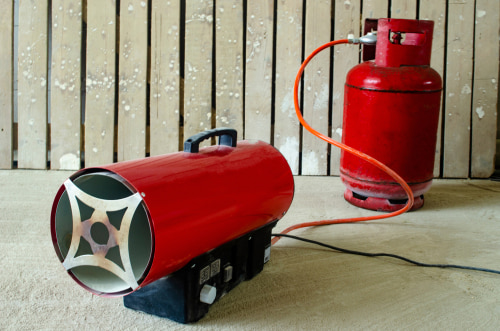
Electric Resistance Heaters
These setups use electrical resistance to generate heat. They are incredibly efficient but can be more costly to operate long-term due to electricity costs.
Electric resistance heater characteristics:
- Efficiency: 95-100% (converts almost all electrical energy into heat)
- Common types: Convection, Radiant, and Fan-forced
- Suitable for: Well-ventilated, non-hazardous areas
Subtype highlight I: Portable Electric Process Heaters with Customizable Controls
- Precise Temperature Control: Customizable to specific process requirements, minimizing overheating.
- Energy Monitoring and Optimization: Often includes features for tracking and reducing energy consumption.
- Durable, Low-Maintenance Design: Reduces downtime and the energy wasted on inefficient operation.
Subtype highlight II: Portable Induction Heaters
- Direct Heat Transfer: Efficiently heats conductive materials without warming the surrounding air.
- Rapid Heating Cycles: Quickly achieves high temperatures, reducing overall energy consumption.
- Low Energy Loss: Minimizes energy wasted as heat is directly transferred to the target material.
Propane/Natural Gas Infrared Heaters
These heaters burn propane or natural gas to generate infrared heat, which directly warms objects and people instead of the surrounding air. However, proper ventilation is imperative when using these systems to prevent the buildup of combustion byproducts, especially carbon monoxide which can be deadly.
Propane/Natural Gas Infrared Heaters characteristics:
- Efficiency: 30-50% (combustion efficiency), 80-90% (radiant efficiency)
- Types: High-intensity and Low-intensity Infrared
- Suitable for: Well-ventilated, outdoor, or areas with high ceilings
Subtype Highlight: Portable Gas-Fired Infrared Heaters
- High-Intensity Infrared Heat: Directly warms objects and people, reducing energy wasted on heating air.
- Fuel Efficiency: Often more energy-efficient than electric heaters for large, well-ventilated spaces.
- Rapid Heat-Up Times: Quickly achieves desired temperatures, reducing overall energy consumption.
Diesel/Kerosene Fired Heaters
Similar to gas heaters, but using diesel or kerosene as fuel, these heaters are robust and durable, capable of outputting massive amounts of heat. However, toxic fumes they emit make them ill-suited for indoor use, unless there’s exceptional ventilation.
Diesel/Kerosene Fired Heaters characteristics:
- Efficiency: 20-40% (combustion efficiency), 70-85% (overall efficiency)
- Types: Convection and Radiant
- Suitable for: Outdoor, construction sites, or areas with good ventilation
Heat Pump Heaters (Reverse Cycle)
By far the most versatile option on this list, heat pumps work by transferring heat from one place to another, meaning they can provide both heating and cooling. Plus, with the introduction of inverter technology, they became increasingly efficient in optimizing energy consumption.
Heat Pump Heaters characteristics:
- Efficiency: 200-400% (COP*)
- Types: Electric and Gas-powered
- Suitable for: Well-insulated, moderate climate areas
Subtype highlight: Portable Heat Pumps with Inverter Technology
- Inverter-Driven Efficiency: Optimizes compressor and fan speed for maximum efficiency.
- Reversible Operation: Provides both heating and cooling, maximizing utility and efficiency.
- High Coefficient of Performance (COP): Achieves high ratios of heat energy output to electrical energy input.
*Coefficient of Performance (COP): Measures the efficiency of the heating cycle, with higher values indicating greater efficiency.
Hydronic (Hot Water/Oil) Heaters
By circulating hot water or oil through a system of pipes and heat exchangers, hydronic units efficiently and consistently distribute heat to the surrounding area. However, their need to have a boiler or heater attached makes them less mobile than other options on this list.
Hydronic Heaters characteristics:
- Efficiency: 80-90% (boiler efficiency), ~95% (distribution efficiency)
- Types: Portable Boilers with Heat Exchangers
- Suitable for: Applications requiring precise temperature control
What is the most efficient industrial heater?
While all of the above types of portable heaters are feasible for industrial applications (to an extent), some variants stand a notch above others in terms of efficiency. Here are the current Top 3 and reasons why they rank better:
- Electric Resistance Heaters (95-100% efficient)
- Why: Direct conversion of electrical energy to heat with minimal loss.
- Heat Pump Heaters (Reverse Cycle) (200-400% efficient in terms of COP)
- Why: Highly efficient in moderate climates for both heating and cooling.
- Hydronic (Hot Water/Oil) Heaters (up to 95% efficient in distribution)
- Why: Efficient distribution of heat, especially in applications requiring precise temperature control.
Where can I find a high-efficiency portable industrial heater near me in Riverside County?
Looking for an advanced portable heater for your industrial facility in Ripley or a high-performance mobile AC for commercial use in Eastvale? Aerco Systems has got you covered, no matter where in Riverside County you are.
Since 1978, we’ve been the preferred choice for entrepreneurs and industrialists, owing to our ability to deliver the most suitable solutions in record time. Whether you’re replacing your worn-out AC or wish to enhance your heating capacity (or both), you can rely on us to keep your operation running. Get in touch with us today!