
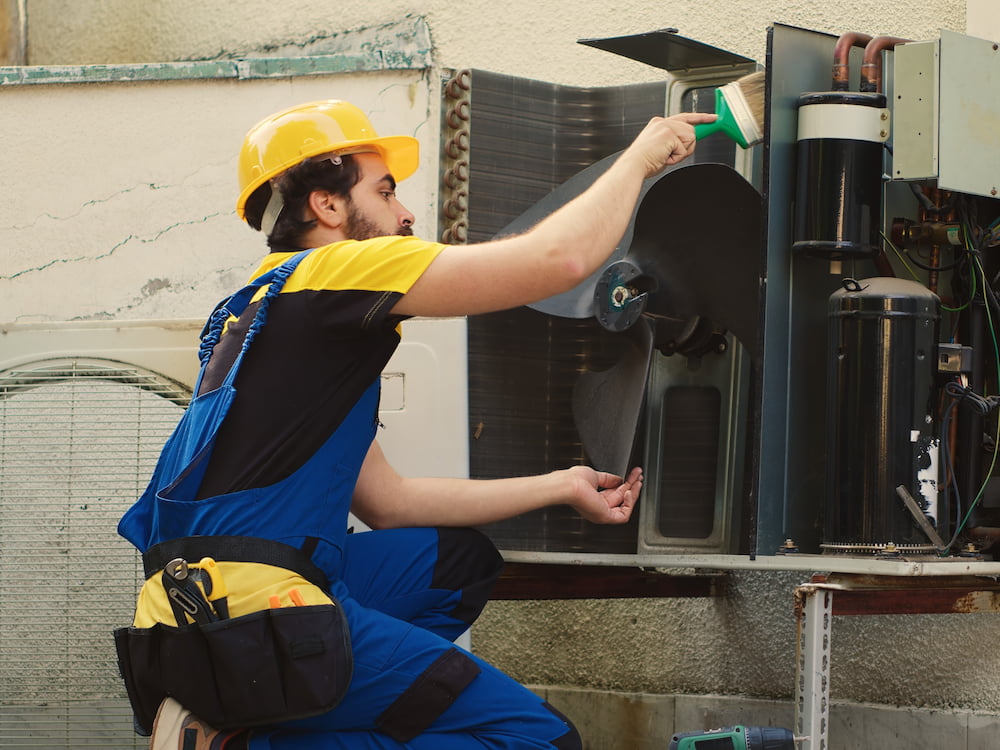
By now, commercial HVAC systems have become an integral part of virtually every facility anywhere on the planet. Their ability to control the temperature, humidity, and air quality makes them essential for the efficient and uninterrupted functioning of operations across many different sectors, ranging from small-scale retail to massive manufacturing plants.
Despite their vital role, hardly anyone knows what the components of these systems are – or what role each serves. Today, we’ll help you understand these intricacies so that, the next time you need to choose San Diego commercial HVAC rentals or integrated solutions, your decisions will be driven by knowledge and result in the best choice for your organization.
What are the parts of a commercial HVAC system?
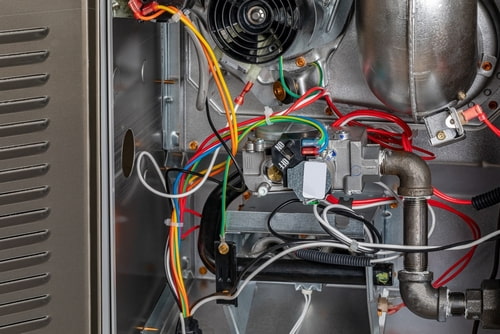
Commercial HVACs are complex systems with intricate infrastructure and many components that work together to form a cohesive whole.
Thermostat
The thermostat is the control center of the HVAC system, which allows the user to manage the temperature and humidity levels with great precision. Sensors within the unit can “read” the deviations in said levels and automatically trigger heating or cooling to keep the parameters within optimal values.
Furnace or Boiler
These are the heat-generating parts of the HVAC system. While they serve the same purpose, they operate on different principles:
- The furnace heats air and distributes it through the ductwork;
- The boiler heats water which is then circulated through a radiator system.
Condensing unit
Located on the outside of the building, the condensing unit’s primary purpose is to release the absorbed heat outside. It consists of:
- A condensing coil (“condenser”) is responsible for transferring the heat outdoors through a series of pipes;
- A compressor pumps the refrigerant through the system, circulating it between the condenser coils and the evaporator in a closed loop.
Evaporator coil
The evaporator coil is an essential component of the AC part of the HVAC, whose purpose is to cool the air by absorbing heat utilizing refrigerant. Typically, it can be located inside the air handler or attached to the furnace.
Air Conditioner
This is what everyone thinks of at the mention of AC. This indoor unit recirculates the air, cooling and dehumidifying it in the process. It consists of:
- An air handler, which contains the blower responsible for circulating air;
- The evaporator coil filled with chilled refrigerant, courtesy of the compressor;
- Filter(s) that remove contaminants from the air before it is circulated, contributing to the overall air quality in the building.
- The thermal expansion valve, typically located inside the air handler or the evaporator coil, controls the pressure of the liquid refrigerant and turns it into vapor, so it can be circulated through the system.
Chiller(s)
Typically used in large commercial buildings, chillers are outdoor units that cool water and reintroduce it into the building via air handlers or fan coils. Chillers come in two variants:
- Air-cooled chillers release the heat into the air;
- Water-cooled chillers use a separate water source to transfer heat, which is why they’re often paired with cooling towers.
Humidifiers/Dehumidifiers
These units are essential for the health and comfort of the occupants. As their names suggest, humidifiers add moisture to the air while dehumidifiers remove it, thereby keeping the humidity levels within the optimal parameters at all times.
Control system
Control systems allow for the centralized control of every aspect of the HVAC system, including temperature, humidity, ventilation, and a whole host of other parameters. Advanced variants, and their recent smart upgrades, can be integrated seamlessly with the building’s automation.
This opens up an incredible array of functionality and energy-efficiency-enhancing options, such as zoning, remote monitoring and management, and demand-based or predictive control, to mention a few.
Ductwork
Of course, we must mention the most humble, yet critical part of the HVAC infrastructure – ductwork. This elaborate network of tubes and valves is almost single-handedly responsible for distributing the heated/chilled air throughout the building, as well as reintroducing the unconditioned air back into the system.
Due to the sheer size of commercial facilities and strict temperature/air quality requirements, ductwork in these settings is typically extremely elaborate, reflecting the complex nature of commercial operations.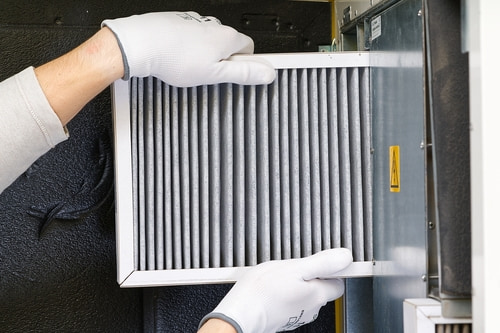
Who in San Diego offers high-end commercial HVAC rentals near me?
Aerco Systems, LLC. is the top provider of top-tier portable heating and cooling solutions for commercial and industrial facilities. Here, you can find different types of popular HVAC systems, based on the exact requirements of your operation.
Our setups come equipped with modern features that ensure optimal performance, high reliability, and enhanced energy efficiency, making them ideal for short and long-term use in any setting. Contact us today and let our experts come up with a solution ideal for you!